
Frozen Turtles
Less precious than you think

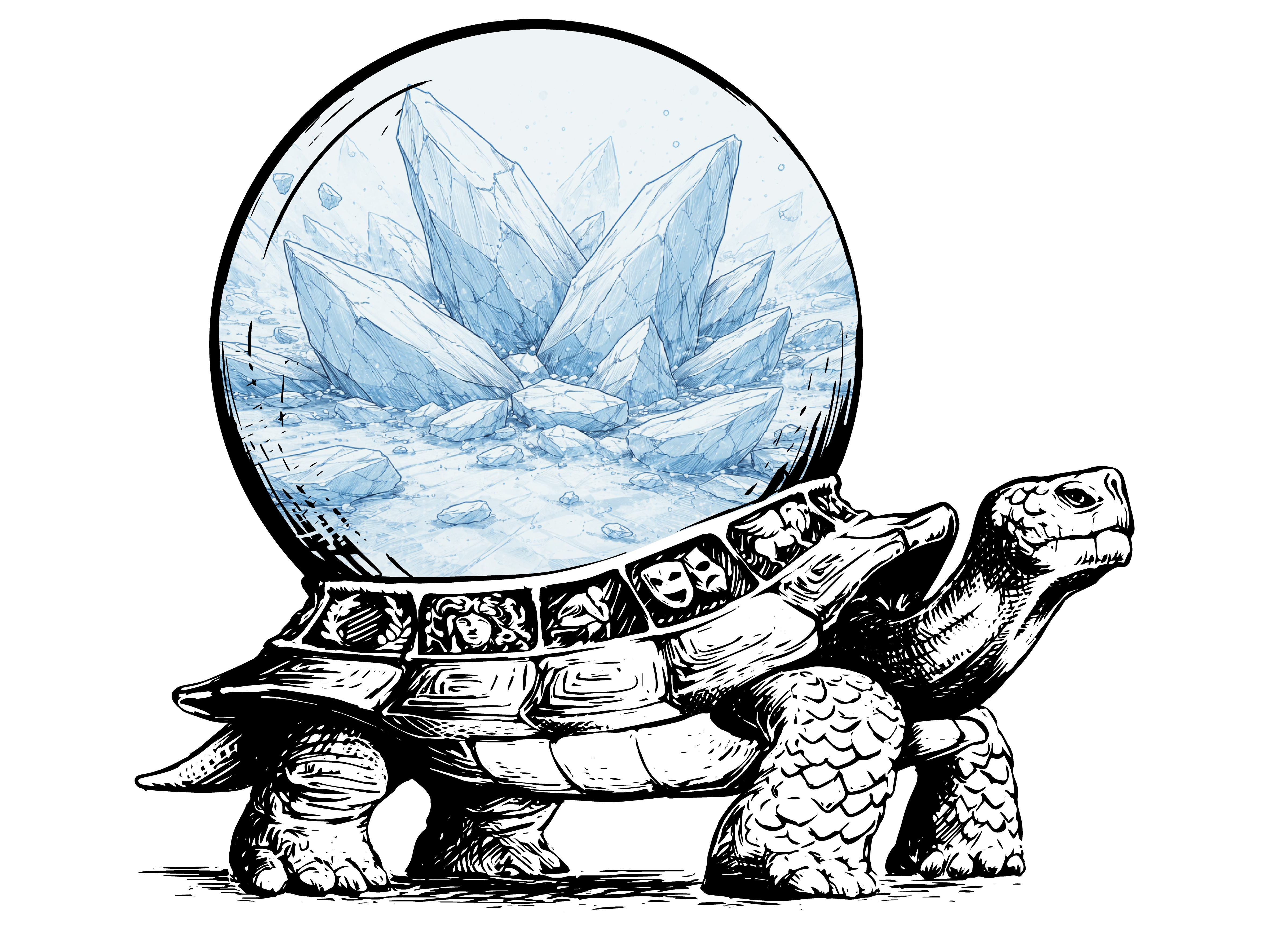
I wake up to -22°F. I stare upon the suburban tundra, and not a soul is stirring. No people, no birds, no rabbits. Then a strange thought hits me—how did turtles survive sub-zero temperatures?
Nine species of native turtles live around Minnesota’s 10,000 lakes. In the summer, this image is easy to imagine—a red-eared slider sunbathing on a log or a box turtle crawling through the grass. But on days like this, that prospect is impossible to fathom. Apparently, when winter arrives, turtles enter brumation. They burrow into the mud, slow their heartbeats until they become almost nonexistent, and enter this living state of suspended animation.
I withdraw from the freezing windowpane and realize how broken my conceptual definition is. Turtles are cold-blooded creatures, their internal temperature regulated by the external environment. They are quite literally solar-powered—needing a bright, warm sun to exist, right? Yet here they are, enduring -22 degrees.
I shiver and will myself to start the day. To brush my teeth, to stretch, to pray, to read, to journal, to pour some coffee, to light a candle, to set my timer, and to write for thirty minutes. One domino, two domino, three domino, four. Five dominoes, six dominoes, seven dominoes, more.
Nothing about fiction writing is that difficult. It takes no physical effort, no social energy, no careful research, and no capital. But because I treat it like a sacrament, all it takes is a slight disruption—a poor night’s sleep, an early meeting, a noisy house—and this delicate, daisy-chained link of rituals topples into oblivion.
It’s odd because I don’t have this problem with other areas. Take exercise. I never considered myself an athlete; I was a bit of a nerdy kid, more interested in action figures than sports. Yet, for all my adult life, I never struggled with exercise. No matter how chaotic a day, I can squeeze in a workout. Maybe it’s because my standards are low—thirty minutes of bodyweight movements or a light jog suffices. I’m not trying to become a world-class athlete, so I can do crappy workouts and remain in shape. Because I don’t identify as an athlete, I can survive as one.
With AI, it’s never been easier to be a knowledge worker. We have a custom tutor at our fingertips, so we can learn faster than ever before. But many people who, even after all the developments in the last few years, remain skeptical of it. “It couldn’t possibly do what I do,” they think. “It didn’t study case law for five years!” “It didn’t waste nights on StackOverflow, nursing a Red Bull addiction, to learn software engineering.” “It couldn’t possibly pen a quality product spec!” It’s funny, we complain about work and pine for the day we can retire, yet hold our work as so sacred that we can’t accept help.
When we cling so rigidly to these concepts of ourselves and our work, we can reject the very tools and opportunities that can help us weather the storms of change. Whenever a new technology emerges—Internet, mobile apps, social media, LLMs—dynamics shift. A rift opens, temporarily democratizing the means of production and leveling the playing field. Seasoned veterans find themselves competing with young punks with clever tools. We clutch the precious pearls of the past, squeezing them until they shatter in our closed fists.
What if we held our identities with less preciousness? We are told to thrive, but thriving is a luxury. The more sacred we make something, the more fragile it becomes. Enduring hardship, showing up on bad days, weathering rough seasons—this is the baseline. Without durability, we don’t get to play.
Turtles don’t preserve the days of summer. They endure the frozen nights of winter.
Well said!👍