
Home Economics
Changing the world, one HVAC filter at a time

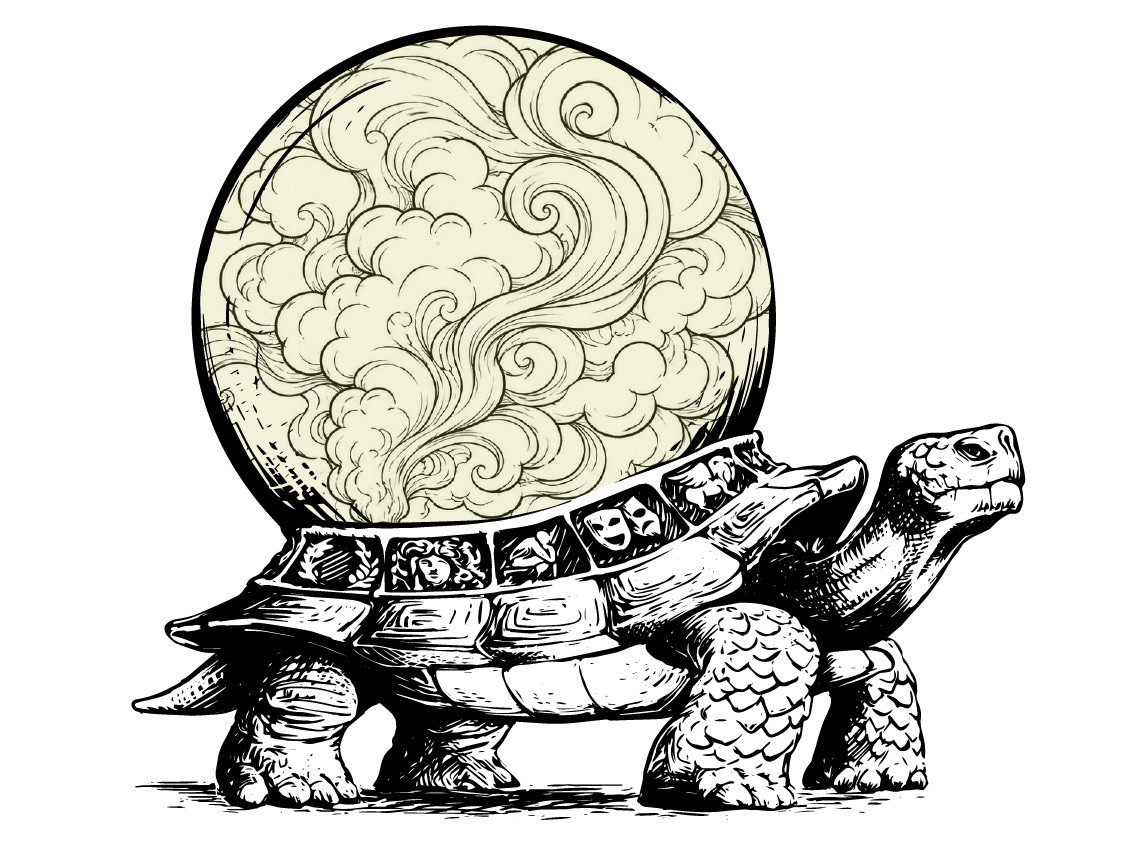
As I write this, wildfire smoke outside my window has pushed the AQI to 451. The world is burning, prices are rising, and geopolitical conflicts are escalating. It’s tempting to give in to cynicism or to accept it all as immutable. But if you’re reading this, I imagine you aren’t giving in to that temptation, and there’s a small part of you that wants to change the world. Here’s how.
Xenophon was a military leader and philosopher whose Oeconomicus is one of the earliest surviving works on oikonomia, the root of economics. Derived from words for “household” and “management,” the term originally captured the ordering of domestic life: the division of labor, the care of property, and the use of resources. Economics later expanded outward to the city, region, and nation, but the household remains the atomic unit of society because it is the first place where the individual begins to commune with others.
Years ago, when I began a deliberate reflection on my values, I listed kindness and tried to define it in a way that made sense to me. My best definition was “delivering goodwill in expanding concentric circles.” Start with the household → close family and friends → coworkers and community → country → world. But goodwill alone remains abstract. We live in a material world, which requires a certain degree of practical management. How can one possibly enact outward goodness if one’s household is a disordered mess?
More than a third of American households rent their homes, yet there’s a perception that renters have no obligation to the property they lease. The same holds for hotels, rental cars, public parks, and borrowed tools. There’s a temptation to jump on the hotel bed because it’s not ours or trash a rental car because it belongs to some faceless company. Ownership is often lauded as a great thing—a source of power and a point of pride—whereas its absence is an excuse for carelessness. But just because we own something doesn’t mean we are owning it well.
At work, corporations often exhort employees to “take ownership,” yet a corporation, by its very nature, dilutes the notion of ownership. A publicly traded company is fractionally owned by millions of shareholders, each holding a percentage of a percentage, and decision-making is distributed among executives and a board of directors. What they really want is accountability: someone willing to accept responsibility for a problem they do not personally possess. Something need not belong to us to deserve our care.
We are all just passing through this terrestrial plane, temporarily entrusted with a mind, a body, a calendar, relationships, roles, and an environment. Even though it’s all temporary, we should not detach from the material world. Rather, we should seek the right relationship with the things entrusted to us. A house should be tidy, but we should not make it a shrine. If we aim to improve society, the household gives us a small domain we can influence. But the right mindset is not ownership; it’s stewardship.
Ownership is passive, whereas stewardship is active. A steward is responsible for the well-being of the things under their care, and a good home steward stays on top of maintenance, which reduces unseen risks, prevents small problems from becoming expensive ones, and makes the home calmer to inhabit. It also creates a place from which we can welcome others and practice generosity. Tending to the exterior of our homes—clean windows and tidy landscaping—can inspire neighbors to do the same. People who care for the places around them often become more attentive to their local community and common spaces. Practiced consistently, stewardship extends beyond the property line.
You want to change the world? Start by changing your HVAC filter.
Junk Drawer
I wanted a tool that could translate the ideal of stewardship into small acts: change the air filter, flush the water heater, and clear the gutters. So I built Stu, an app that helps us care for our homes—one part of the world within our reach.
Stu is now available on the App Store.
This is accurate! Thank you for sharing!.👍