
Lose the Rope
On giving up the illusion of security

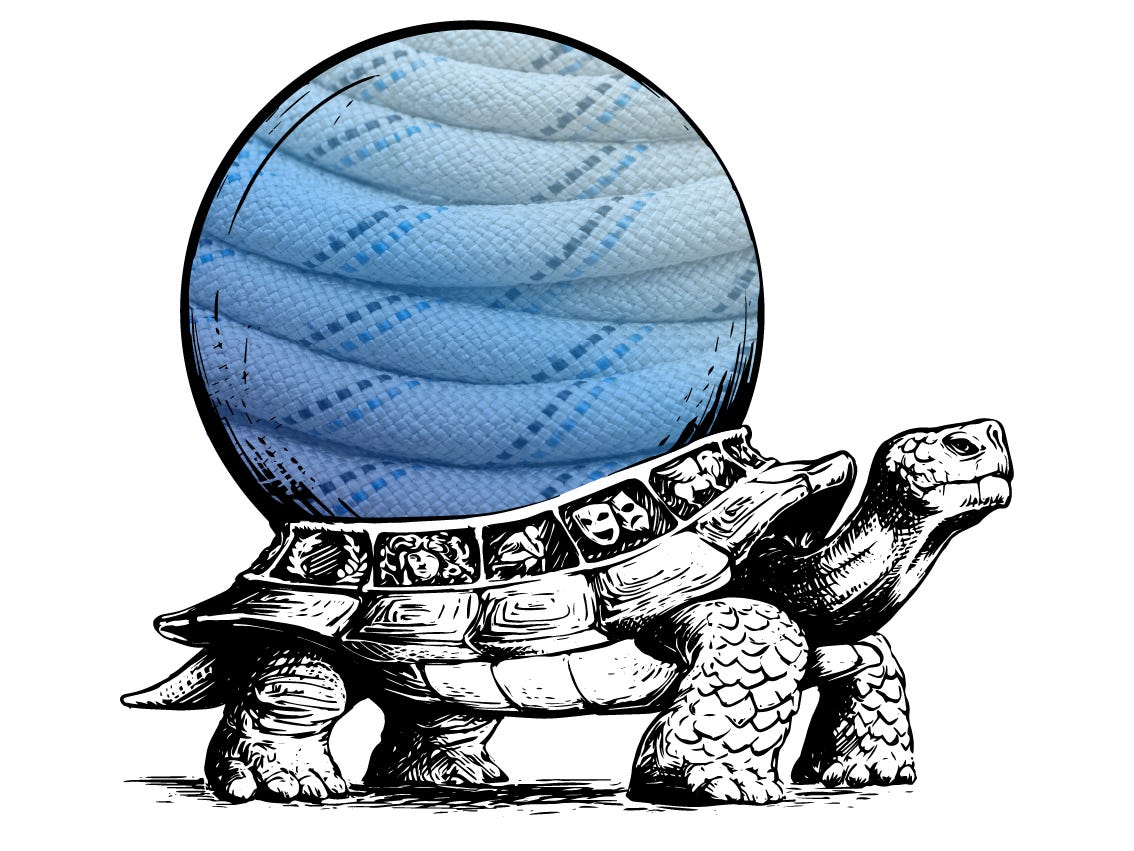
Wind River Range, 2025 – Anyone who says backpacking is fun is full of shit. Wandering in the wilderness, hauling forty pounds of dehydrated food, unclean water, stinky clothes, and inadequate shelter, with no eject button to end your misery, is anything but fun. The only way to persevere is to slip into the subhuman state my friend and I call The Plod.
The Plod could be the subject of another essay, but it’s about bowing your head, resigning yourself to life as a pack-mule, and accepting that, with enough time, any distance is walkable.
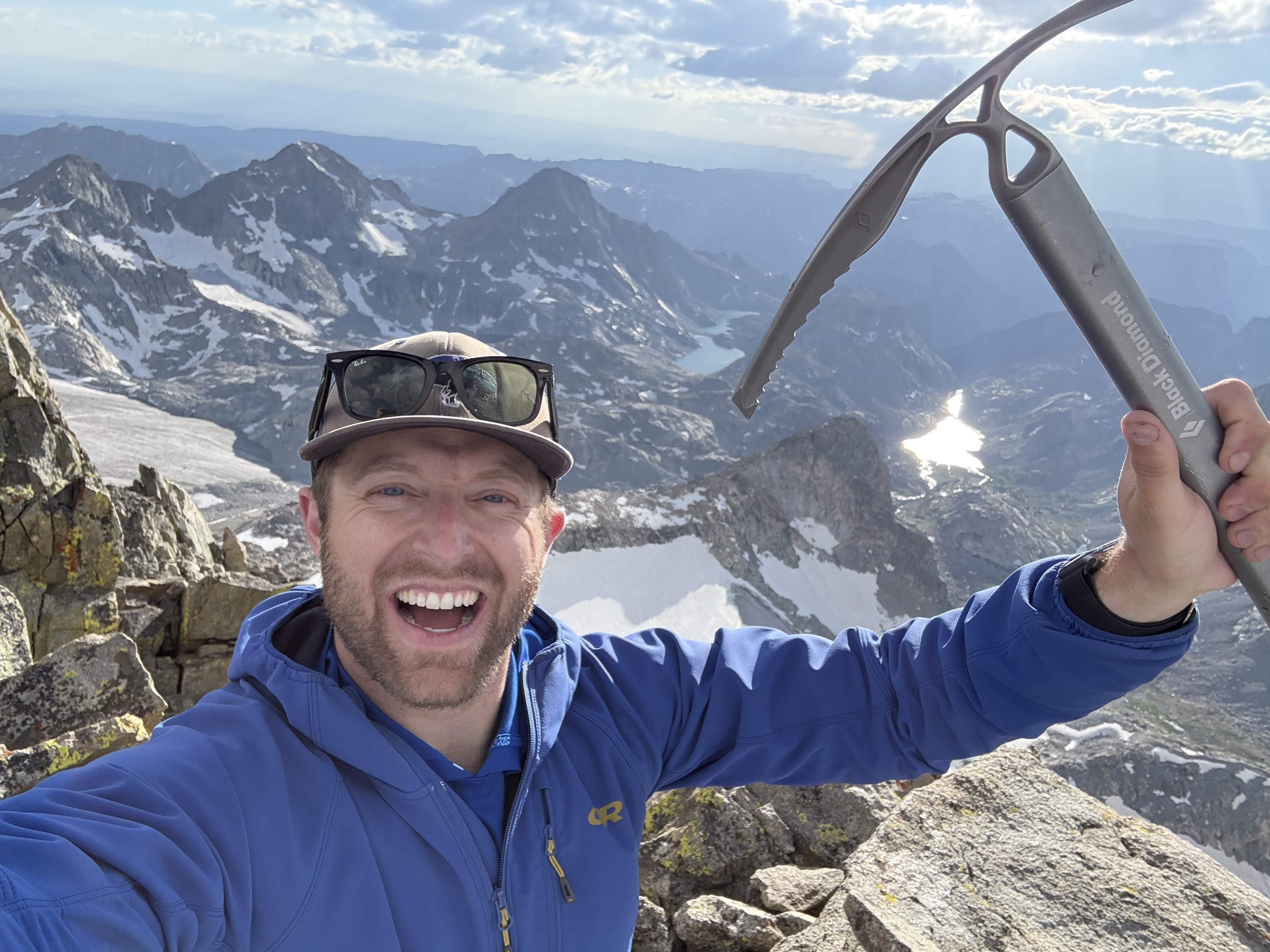
We were plodding back from the summit of Gannett Peak—the highest point in Wyoming and my 49th state highpoint. It was the hardest summit I’ve done, a five-day, back-to-back marathon with a 40-pound backpack through remote wilderness. We were on day four when we passed another group.
They looked a lot better than we did. We were filthy and haggard—our hiking poles bent, our backpacks frayed, our lips chapped, days of sweat and DEET plastered across our faces. Dried blood from a misplaced ice axe clung to my tattered pants. Their backpacks were neatly packed. Their clothes fit well. They had helmets and ropes.
“Did you summit?” they asked.
We nodded as their noses wrinkled at our stench. They looked over our haggard faces and asked, “How?”
I quit my job last week.
Maybe “job” is reductionist. I quit my career after 11 years—clawing my way up Mount Corporate for more pay and greater scope. This year had been the pinnacle of that climb—I was on a good team with a good product and a decent reputation. When my coworkers found out I was leaving, they asked me a dozen times, “Why?”
I don’t think I gave a great answer because I didn’t want to waste their time with extended metaphors. But the simplest way I can describe it is an itch. Like having a rock in your shoe.
This isn’t a unique feeling; I doubt many people get their jollies from working a modern office job. But the sense of security that comes with a reliable paycheck is undeniable, especially in a world of growing uncertainty. Yet I think we all have these itches—lingering questions about what life could be like on our terms. Freedom of location, time, and energy. We daydream about it or jolt awake at three in the morning with dread. Then we suck it up and keep plodding, accepting the rock in our shoe.
Schenectady, New York, 2015 – I arrived in a rusty pickup from Michigan, with an air mattress and a few boxes in the back. I picked up the keys to my first apartment sight unseen, only to find decaying meat in the refrigerator and death notices in the mailbox. The previous resident had died. I canceled my lease on the spot, ran out of there, and scrambled to find a new apartment. I was lucky to find one across town. After paying the first month’s rent, I had $250 left in my bank account. My dad wired me a few thousand dollars.
Thankfully, I started my first corporate job at General Electric on Monday. Within a few months, paychecks began hitting my account. I paid back my dad and built an emergency fund. A year later, I discovered Mr. Money Mustache and the concept of financial independence. I opened a Vanguard account and bought my first ETFs. I was afraid the money would disappear, so I checked the account every night, watching the numbers tick up and down.
I rotated to various locations across the country. At one point, I found myself in San Ramon, California, paying twice as much for an apartment half the size of any I’d lived in before. I thought I made decent money until I volunteered at a food shelter and learned that the income threshold was higher than mine. My truck started failing, so when my next role took me to South Carolina, I drove across the country, sleeping in Walmart parking lots and replacing fuses every hundred miles.
I biked to work in the hot, humid summer until I found a $5,000 Prius I could buy outright. I stayed in cheap apartments and didn’t buy concert tickets, nice clothes, fancy furniture, or international flights. But the rock in my shoe kept digging in. I was plodding along, yet I wasn’t learning enough. I wanted to build something, so I read, took courses in product management and machine learning, and applied to hundreds of jobs in Seattle.
Seattle, 2019 – I landed a product role at Whitepages and moved west. The cost of living went up, but so did my learning. I kept investing, even as the Prius started to fail and I found myself taking it apart and riding buses with a replacement battery on my lap. As I earned more, I avoided spending it on expensive restaurants or high-end gear. I took on new roles and greater responsibility to build my skills. I tried to remove the rock in my shoe with half-hearted side hustles—a publishing press, newsletters, blogs, SEO ad revenue, and bicycle food delivery—but nothing stuck. I wasn’t ready to step off the hamster wheel.
Tonka Bay, Minnesota, 2024 – My wife and I moved closer to family. My leadership supported my transition to fully remote work. I kept my salary, we bought a house, and I gained stability. On paper, I had arrived. I had enough savings to support a modest Midwest lifestyle for years, with several more at our current pace. I felt incredibly blessed.
Yet, that damn rock was still in my shoe.
I realized I wasn’t seeking financial independence. I didn’t want to stop working. Work had given me this life and brought me more happiness than material things, travel, or other leisure pursuits. I wanted to build something of my own. But what did I know about building a business?
I wasn’t an engineer. I hadn’t worked in sales. I wasn’t a smooth-talking, confident presenter. I was nothing but a dabbler who’d spent a decade in a corporate harness. I considered moonlighting, switching roles, or waiting to pursue entrepreneurship until the time was right.
But there would never be a perfect time or perfect circumstances. I doubted I’d ever feel 100% confident in my knowledge and abilities. If I waited for 100%, it might never come, because the world could change or I could change.
I’d written enough code to be dangerous. I’d participated in enough sales calls to know what matters. I’d developed enough discipline to manage my time and energy. I had 80% of what I needed. The timing and conditions were as good as they were going to get.
Did I have the guts to give up the illusion of security?
I blinked as the group of climbers scanned my dirty, unimpressive body.
“This is our third attempt in five years,” one of them said. “We just can’t crack it.”
They had all the right gear—bear canisters, helmets, ropes—in all the right brands. They were fit. They had probably spent more time climbing than I had. In comparison, I wasn’t a mountaineer. I’d climbed 48 other state highpoints, but only a handful were real mountains. I hadn’t followed best practices on this climb: I started too late, the weather wasn’t ideal, I didn’t wear a helmet or bring rope, and I downclimbed by headlamp until the batteries ran out.
Some might call it reckless, but I had spent enough time at elevation to understand my limits and enough experience scrambling on glaciers to trust my footing. I wasn’t perfectly prepared, but I had 80% of what I needed: minimally viable gear, minimally viable skill, and minimally viable judgment. Any more would have weighed me down.
The guy looked at me and asked, “So, what do you know that I don’t?”
I replied, “Lose the rope.”
Junk Drawer
FYI: I’m now building my own products at Quickhatch. Check it out!
I hope the pebble is gone, Justin.
Looking forward to your next post. I enjoyed reading this!
Best Post Yet!! Very gritty and personal.